
Bec Djordjevic, founder and director of Munash Organics.

Munash Organics: Innovating Regenerative Gardening and Farming in Australia Through Soil Remineralization

James Jerden

 Bec Djordjevic’s journey to founding Munash Organics began in the rich volcanic soils of Pootilla, just outside Ballarat in Victoria, Australia. She grew up on a 60-acre organic plot of land that her father, Ian Munro, had purchased with the aim of growing produce without the use of synthetic chemicals. On the family farm, Bec developed a deep appreciation for nature, soil health, and agriculture from a young age. Her father, Ian, founded Munash Natural Fertilizers in 2001, which laid the groundwork for Munash Organics and Bec’s vision to replace petrochemical-based farming with sustainable, regenerative agricultural practices throughout Australia. 

Excepteur sint occaecat cupidatat non proident, sunt in culpa qui officia deserunt mollit anim id est laborum.

 The principle of Rockdust is to balance the soils. That’s the most important thing it does. It can also balance water, improve air quality, as well as it being a very very good food source for microbes. It works on all soil types, which keeps it very simple.

Excepteur sint occaecat cupidatat non proident, sunt in culpa qui officia deserunt mollit anim id est laborum.


From a Munash Organics Facebook post.
 The inspiration for Ian Munro’s family business (Munash Natural Fertilizers) came, in part, from the observation that vegetables grown in their nutrient-rich volcanic soils were not only healthier but also had superior flavor to vegetables grown elsewhere. This observation eventually led Bec’s family to explore how volcanic and other natural rock dusts could be used to enrich nutrient-poor soils and those degraded by intensive farming. In discussing the promise of using natural rock materials as soil amendments, Bec’s father, Ian, is quoted as saying: Excepteur sint occaecat cupidatat non proident, sunt in culpa qui officia deserunt mollit anim id est laborum.
 In 2011, Bec built on her father’s nature-based fertilizer work by founding Munash Organics. She recognized the market need for organic soil conditioning products that can be used by both backyard gardeners and larger-scale growers. Munash Organics is a second-generation family business dedicated to helping Australian growers of all scales transition to regenerative practices. 

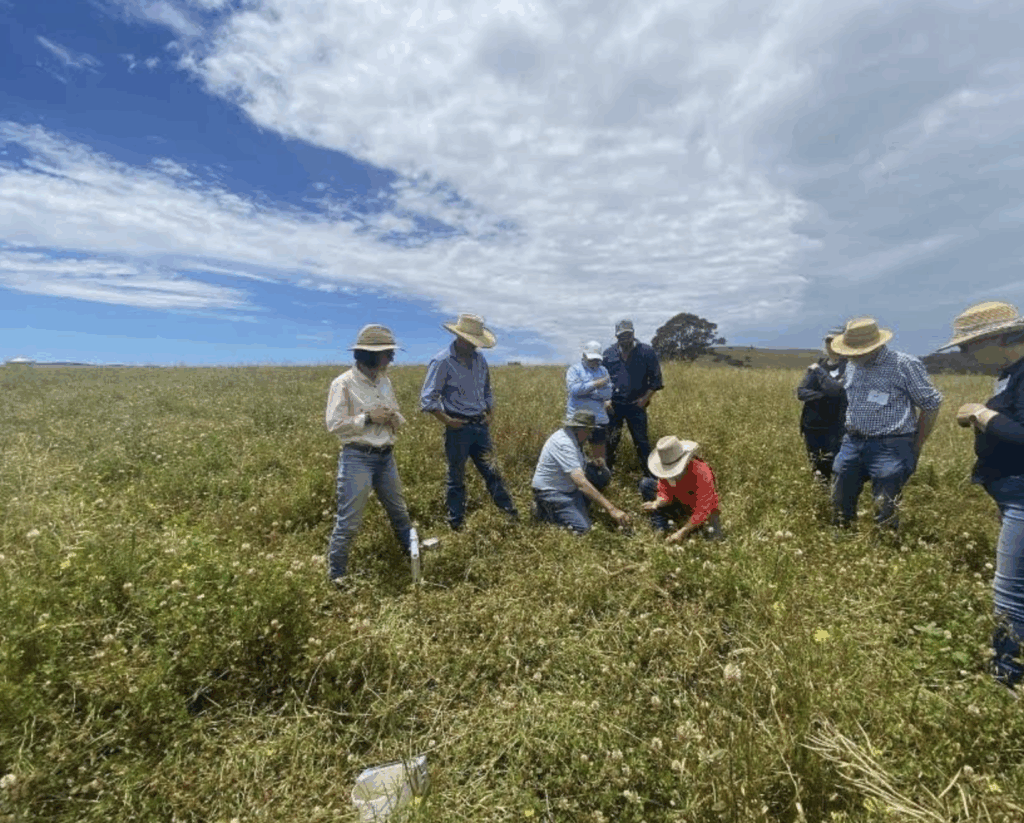
Munash Organics team with colleagues sampling soils on a regenerative farm in Austrailia. Photo by Munash Organics.

The Munash Organics Philosophy

Based on Bec’s experiences on her family farm, Munash Organics was born out of a deep-rooted philosophy that connects human well-being directly to soil health. The company’s very name is an anagram of “humans,” reflecting their belief in the intrinsic link between people and the earth. The Munash philosophy goes beyond just product development; it’s a mission to revolutionize how growers think about gardening, agriculture, and our relationship with the natural world.
 At the heart of Munash Organics’ approach is the concept of soil remineralization: the application of natural, mineral-rich rock powders to restore and revitalize degraded soils. Drawing from Ian Munro’s pioneering work blending different rock powders, the company developed products that replenish soil with essential macro, micro, and trace element nutrients. This approach stands in stark contrast to conventional fertilizers, which commonly contain a narrow range of macronutrients (nitrogen, phosphorus, and potassium, or NPK), which can contribute to environmental degradation. Conventional NPK fertilizers usually come in the form of salts produced by energy-intensive (e.g., high carbon footprint) industrial processes. Furthermore, their high macronutrient content and solubility can lead to hazardous accumulations of nitrogen and phosphorus, leading to eutrophication, oxygen depletion, and dead zones in local freshwater and near-shore ecosystems. The use of rock dust as a natural slow-release fertilizer (at recommended application rates) does not cause environmental damage to local ecosystems. In fact, the full nutrient spectrum found in volcanic rock dusts actually enriches soil ecosystems by providing trace elements to beneficial microorganisms and improving soil properties such as pH, texture, organic carbon, and water retention. As stated by the Munash Team: 
Our ancestors grew food in soil so rich, you could almost taste the minerals and vitality in every bite. The soil was alive—a vibrant, interconnected system where every worm, microbe, water droplet, root, and leaf played its part. Back then, they understood that soil wasn’t just a patch of dirt—it was the very source of life, filled with nutrients that made food truly nourishing. Fast forward to today, and things have changed. Our focus narrowed to NPK—Nitrogen, Phosphorus, and Potassium—just three pieces of a much bigger puzzle. But we forgot something vital: true soil health is about the whole picture, the entire system working in harmony. The physical, biological, and chemical connections in the soil are what make it thrive.
 

From a Munash Organics Facebook post.

 Munash Organics’ motivation for popularizing soil remineralization extends beyond simply selling products. Bec and her team are also passionate about educating the public on the importance of soil health and the adoption of nature-based growing practices. They believe that by nurturing the soil, we can create thriving ecosystems both indoors and out, leading to more nutritious food, healthier plants, and, ultimately, healthier people. This educational mission is evident in their regular workshops, their demonstration garden, and their plans to transform their 150-acre farm into an educational space.

Munash is also driven by a desire to make sustainable gardening practices accessible to a younger generation. Recognizing that most buyers in the horticultural industry are women, and that there has traditionally been a lack of products targeted at younger farmers or gardeners, Bec has positioned Munash Organics to fill this gap. This approach not only differentiates them in a male-dominated industry but also helps to ensure that sustainable gardening practices are passed on to future generations. 

Innovative and Versatile Products 

Munash Organics has developed a diverse range of products for both home gardeners and larger scale agricultural operations. One of the key innovations in Munash’s approach is the addition of biological catalysts to their rock dust products. This process, done on-site at quarries, ensures that the silica and other nutrient elements released during weathering are readily available to plants in the soil. 
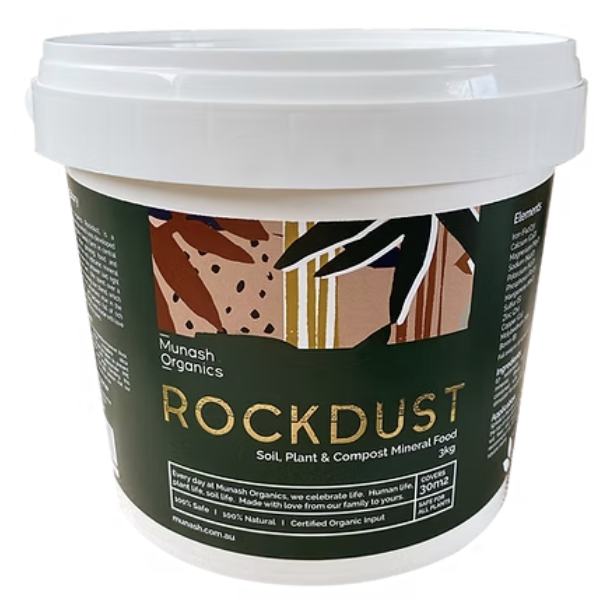
 Munash’s product development is guided by extensive research and testing. They partner with independent organic agronomists to provide unbiased baseline testing of their soil amendment products. These tests include DNA analyses to identify and quantify microbial species, agronomic soil chemistry measurements, chemical and mineralogic analyses of rock materials, and soil carbon tests. This scientific approach ensures that their products not only improve plant growth but also contribute to overall soil ecosystem health. As stated by the Munash team, speaking about their standard rock dust product: 
Think of it as a soil conditioner – it feeds the entire soil matrix, nourishing the microbes, enzymes, and fungi that live there and creating a thriving, productive environment. While we’re often great at adding compost and fertilizers to boost plant nutrition, we sometimes forget about the real hero: the soil itself. For plants, animals, and even humans to thrive, soil needs to be nurtured and seen as the key to everything. So, rock minerals are more than just minerals – they’re soil food. They energize your compost, unlock hidden nutrients, and supercharge soil health.
 

From a Munash Organics Facebook post.


Munash is also working with university researchers on rigorous scientific research projects that objectively measure the impacts of regenerative agricultural practices such as soil remineralization. Data from these studies can be used to both optimize and communicate the advantages of regenerative growing techniques.  

Groundbreaking Research: The 2023 Australian National University Study
 In 2023, Munash Organics took a significant step forward in validating their approach to soil health through a collaborative research project with the Australian National University (ANU). This study, led by Dr. Wolfram Buss from the Borevitz Plant Genomics for Climate Adaptation Group, investigated the effects of Munash Organics’ rock dust on nutrient uptake in wheat plants, soil organic matter stabilization, and carbon sequestration.

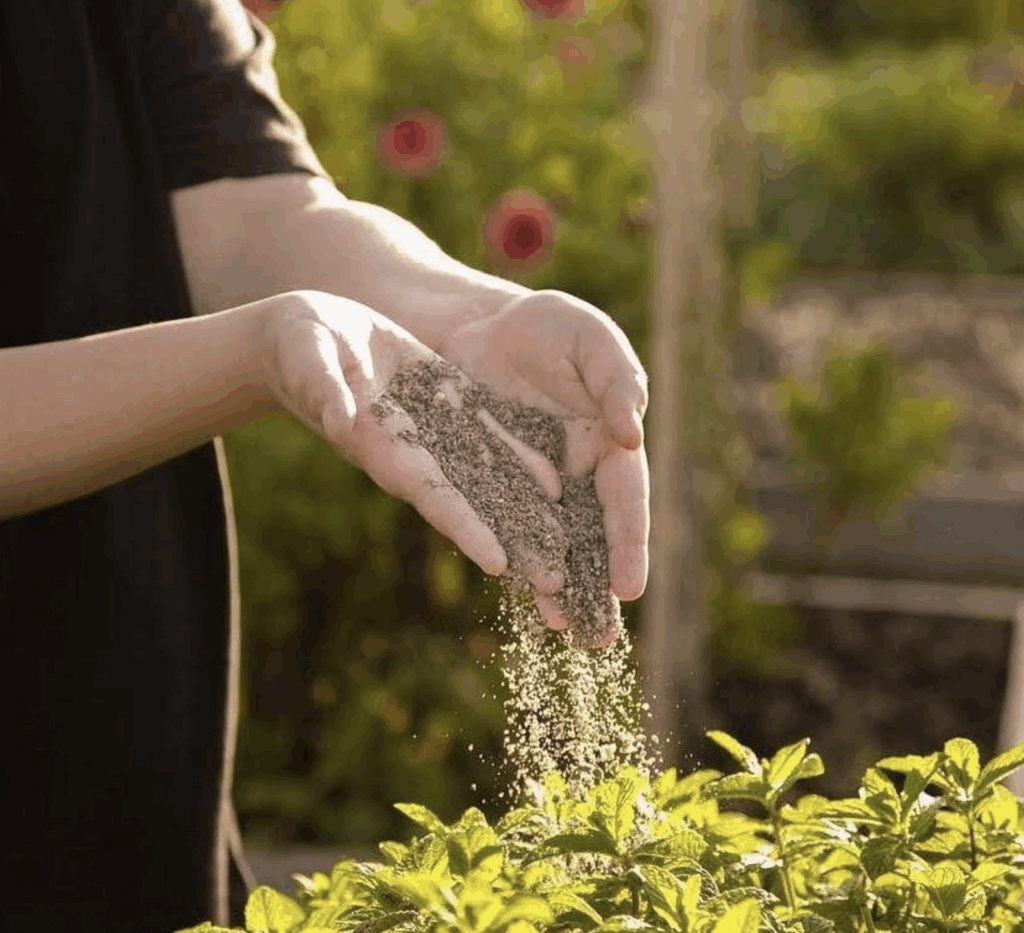
Rock Dust blend application in garden setting (photo from Munash Organics Facebook post).

The rock dust used in the tests was a blend of basalt and granite. Basalt, a volcanic rock common throughout Victoria, contains high levels of calcium, iron, and magnesium. Like basalt, granite is also formed from molten rock; however, it cools underground rather than as lava flows and contains significantly more potassium, sodium, and silicon. Both rock types contain well over 60 other minor and trace elements, such as phosphorus, manganese, zinc, copper, and molybdenum, some of which are essential for healthy plants and microbial communities.

About the author

James Jerden is an environmental scientist and science writer focused on researching and promoting sustainable solutions to urgent environmental problems. He holds a Ph.D. in geochemistry from Virginia Tech and a Master’s degree in geology from Boston College. Over the past 20 years, James has worked as a research geochemist and science educator. He joined Remineralize the Earth because of their effective advocacy, research, and partnership projects that support sustainable solutions to urgent environmental issues such as soil degradation (food security), water pollution from chemical fertilizers (water security), deforestation, and climate change. As a science writer for RTE, his goal is to bring the science and promise of soil remineralization to a broad, non-technical audience. When not writing, he can be found at his drum set.

Support us on Patreon

Thank you for joining us today! Please become a member of RTE and support us on Patreon. Unlike many larger organizations, we work with a team of determined and passionate volunteers to get our message out. We aim to continue to increase the awareness of remineralization to initiate projects across the globe that remineralize soils, grow nutrient dense food, regenerate our forests’ and stabilize the climate – with your help! If you can, please support us on a monthly basis from just $2, rest assured that you are making a big impact every single month in support of our mission. Thank you!

Excepteur sint occaecat cupidatat non proident, sunt in culpa qui officia deserunt mollit anim id est laborum.

Get the Latest from Us

Subscribe to our newsletter for updates.

Stay connected with our latest news!

Frequently Asked Questions

Lorem ipsum dolor sit amet, consectetur adipiscing elit. 

Still have a question?

Lorem ipsum dolor sit amet